
Smart card readers and proximity card readers are two of the most widely used technologies in modern access control. Whether you have tapped a contactless payment terminal, swiped into an office, or badged through a gym turnstile, you have already used one — or both — of these systems.
A smart card is a credit-card sized plastic card that houses a computer chip capable of storing personal data, performing data encryption, and validating information. A proximity card, on the other hand, relies on RFID technology to communicate wirelessly with a reader when held within range.
In this guide we will cover how both technologies work, the key differences between them, and the benefits each one brings to businesses and organisations.
What are Smart Card Readers?
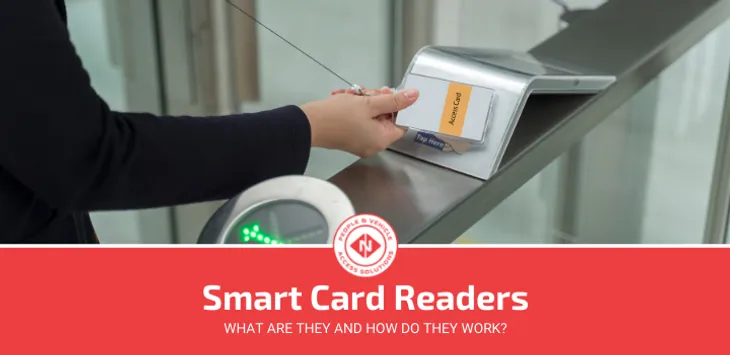
A smart card reader is a hardware device used to write to and read the information stored on a smart card. The readers are easy-to-install appliances that can read the stored data on the smart card either by direct contact or contactlessly via wireless communication.
How Does a Smart Card Reader Work?
The smart card reader is used to interface with either a local computer or to remotely connect to an external information system and distribute smart card information back and forth.
When a smart card makes a successful connection to the reader (either by direct contact or contactless methods), the data residing on the microchip will be read by the reader and will be either processed locally or remotely.
As the smart card does not contain its own power supply, all processing energy requirements are provided by the card reader.
The smart card reader provides an information communication path for a business application to send and receive commands from the card. While each smart card reader manufacturer will have their own protocol for reader communication, the basic process can be simplified as follows:
- In the first instance, a user will communicate with the reader (initiate start-up processes, commence smart card reading programs).
- Secondly, the smart card reader will communicate with the smart card — acting as an intermediary between the smart card and the user. If information is required to be transmitted to an external secure information system, then this process will then follow.
- Either the information system will reply to the smart card reader with processed data, or the smart card will process data that is returned to the smart card reader. Either way, this data is then returned to the originating source, the end-user.
There can be significant differences in smart card reader types, both with internal intelligence requirements and capability functionality. Industrial strength readers (which can be quite expensive) can support a wide variety of smart card protocols compared to the less expensive win-card readers who only work with specific microprocessor-based cards.
Types of Smart Card Readers
There are basically two types of smart card readers available on the market:
Contact Smart Card Reader
As the name implies, a contact smart card reader can only read the smart card data if there is a successful physical and stable connection between the smart card and the smart card reader.
This connection typically occurs when a smart card is pinned to the reader, inserted, and connected to the contact readers, or a physical smart card swiping motion occurs. Data located on the magnetic stripe is successfully received and read by the smart card reader.
The processor situated within the smart card has a working microprocessor chip system that can interface and interact with a wide variety of business applications such as a banking ATM system, entertainment systems, and access control systems.
Contactless Smart Card Reader
With a contactless smart card reader, the information exchange is performed by radio waves, and these readers can interact with multiple smart cards at the same time.
A contactless card does not require any physical contact by the reader; providing the card and reader can wirelessly communicate (via secure and co-ordinated and compatible wireless protocols), data interchange can successfully occur.
To successfully communicate, there needs to be specific proximity or distance between the smart card and the smart card reader for communication to occur.
Contactless smart cards are becoming more popular within western society. For fast and straightforward electronic payments, smart card readers are situated within all businesses that provide cashless payment options for their customers.
The key difference between contact and contactless smart card readers is the manner with which the microprocessor chip on the smart card functions internally. Specific contact areas within the contact smart card must be physically in contact with the contact reader to exchange data between them, and only if a physical connection occurs will it do so.
How Do Proximity Card Readers Work?
While smart card readers rely on an embedded microprocessor chip, proximity card readers use a different approach entirely. A proximity reader allows a contactless card to be presented within its activation radius, and if the user has permission the door is unlocked and entry is granted.
The physical card someone carries is called their “credential” — often referred to as a tap card, contactless card, or prox card for short. These credentials can be left in a wallet, on a lanyard, or in a holder and still be scanned by the reader as long as they are within the read radius.
RFID and NFC: The Technology Behind Proximity Readers
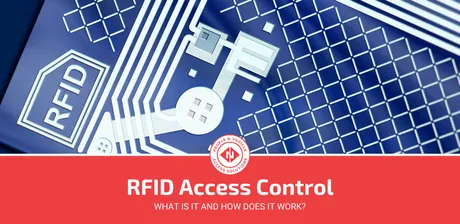
Proximity card readers typically use short-range, low-frequency Radio Frequency Identification (RFID) technology. When a proximity card enters the reader’s electromagnetic field, the field provides the energy needed to power the card’s internal antenna and chip — the card itself has no battery. The chip then transmits its stored data back to the reader.
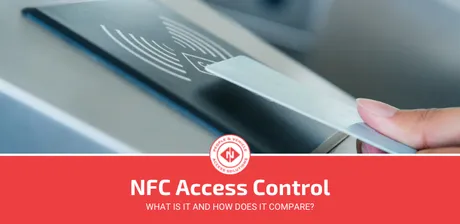
This is the same principle behind contactless payment methods, which typically use either RFID or Near-Field Communication (NFC). Regardless of which protocol is used, all proximity cards rely on data being passed to a reader when held in close range.
How Proximity Readers Differ from Smart Card Readers
The core difference is in what happens on the card itself. A smart card contains a full microprocessor capable of encryption, data storage, and validation. A proximity card is simpler — it stores an identifier that is transmitted when powered by the reader’s field. Smart cards can perform on-card processing, while proximity cards delegate all processing to the reader and the connected access control system.
That said, proximity readers offer their own set of advantages that make them the preferred choice for many access control deployments. For a detailed breakdown, see our guide on the differences between RFID cards and proximity cards.
Proximity Card Reader Features
Easy Management — Proximity systems grant businesses control over who has access and when. If an employee only works on weekends, their weekday access can be revoked with a few clicks.
Widespread — Because so many industries already use this technology, it is easy to find parts, qualified installers, and solutions within any price range or budget.
Low Impact — Proximity systems are designed to integrate smoothly alongside other security measures such as CCTV, biometrics, or two-factor authentication, creating a more cohesive and secure setup.
Hands-Free — Users do not need to touch the reader for it to scan the information from their card, making proximity technology suitable for a wide range of locations and environments.
Fail-Safe vs Fail-Secure Locks
A common question for any card-reader-based access control system is: what happens when the power goes out? The answer depends on the type of electric lock installed.
Fail-Safe Locks
A fail-safe lock remains locked only while it is receiving power. When the power supply is cut — whether by outage, fire, or any other cause — the lock releases and the door unlocks.
This design provides a safe exit in an emergency, which is why fail-safe locks are typically used on fire exits and evacuation routes. The trade-off is that an intentional power cut could unlock the door, although in practice this scenario is rare and usually mitigated by other security layers.
Fail-Secure Locks
A fail-secure lock works in the opposite way: the door remains locked when there is no power and only unlocks when the system is active and a valid credential is presented.
These locks keep a door secure even during a power failure, making them the preferred choice for server rooms, vaults, and other high-security areas. The trade-off is that occupants could be trapped during a power outage, so fail-secure locks should never be used on primary escape routes.
When to Use Each Type
In most installations, a combination of both lock types is used. Fail-safe locks are fitted to doors that form part of an emergency escape route, ensuring occupants can always exit safely. Fail-secure locks are fitted to doors where the priority is preventing unauthorised access, even if the power fails. Building and fire regulations in your area will usually dictate which type must be used on specific doors.
Benefits of Proximity Card Readers
There is a wide range of reasons why proximity card readers are a strong choice for businesses of all sizes. Below are some of the most significant advantages.
Harder to Clone
One of the major factors that shifted security away from the traditional lock-and-key system is the ease with which keys can be copied. Proximity technology is much harder to duplicate and far less accessible than visiting a local locksmith. This is why industries such as hotels, gyms, and transportation have moved to card-based access.
Easy Integration
Proximity card readers are simple to install and integrate with existing systems. They work well alongside CCTV, biometric scanners, and two-factor identification, which is one of the main reasons they are popular with both small and large businesses.
Lower Wear and Tear
Because there is no physical contact between the credential and the reader, the everyday wear and tear that a traditional lock-and-key system encounters is effectively eliminated. The card is never inserted or swiped, and the reader has no moving parts.
Contactless Operation
The contactless nature of proximity cards brings practical hygiene benefits, particularly since the increased demand for touch-free services. Whether you are looking to reduce physical contact points, improve throughput at entry points, or simply modernise your security, proximity technology provides a viable solution.
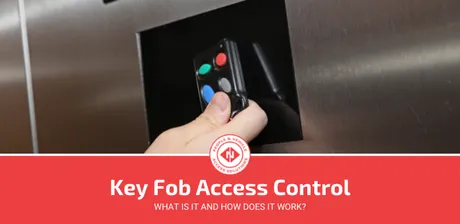
Proximity cards are often confused with key fobs as they use very similar methods and technology, but there are a few differences between proximity cards and key fobs to be aware of.
Cost-Effective
Proximity access control systems are available across a wide price range, making them accessible to businesses of all sizes. Compared to more advanced options such as biometric access control, proximity systems offer a strong balance of security and affordability without cutting corners.
Where Are Smart Card and Proximity Card Readers Used?
Both smart card readers and proximity card readers are deployed across a huge number of industries. Smart cards are commonly found in government facilities, corporate settings, university campuses, e-commerce transactions, network security, vending services, and healthcare card implementations.
Proximity card readers share many of those same environments and extend into even more. Thanks to their wide appeal, low impact, and minimal costs, proximity systems are used in:
- Health and Fitness — Gym and leisure centre access control
- Corporate — Office buildings, co-working spaces, and meeting rooms
- Health and Medical — Hospitals, clinics, and pharmaceutical facilities
- Private and Residential — Apartment complexes, gated communities, and housing developments
- Car Parks — Multi-storey and surface-level parking facilities
- Retail and Consumer Goods — Stockrooms, staff-only areas, and distribution centres
- Airports and Transportation — Terminals, rail depots, and logistics hubs
- Logistics — Warehouses, fulfilment centres, and fleet depots
This is by no means a full list. In fact, it would be difficult to find any industry that would not benefit from deploying smart card or proximity card access control.
Summary
Both smart card readers and proximity card readers provide secure, flexible, and scalable solutions for access control and identification. Smart cards excel where on-card processing, encryption, and multi-application functionality are required. Proximity cards offer a simpler, cost-effective, and hands-free alternative that is easy to deploy and manage at scale.
Whether you choose contact or contactless smart cards, RFID-based proximity cards, or a combination of both, these technologies provide a platform for secure business operations with minimal human intervention — helping organisations protect their people, assets, and premises.