
Automatic Number Plate Recognition (ANPR) is one of the fastest growing technologies in vehicle access control and parking management.
From private car parks to gated communities, organisations across the UK are turning to ANPR to automate vehicle entry, improve security and remove the need for physical tags or tickets.
In this guide, we cover everything you need to know about ANPR — what it means, how the technology works, what a typical system includes, and the benefits it can deliver for your site.
What Is ANPR?
ANPR stands for Automatic Number Plate Recognition. It is a technology that uses specialised cameras and optical character recognition (OCR) software to automatically read vehicle registration plates. The system captures an image of a number plate, extracts the characters, and compares them against a database to identify or verify vehicles — all in real time, without any driver intervention.
ANPR is also known as Automatic License Plate Recognition (ALPR) in the United States and Canada, or simply number plate recognition. The technology was originally developed for police and law enforcement but has since been widely adopted for commercial and private use, including electronic toll collection, parking management, and automatic vehicle identification.
How Does ANPR Work?
An ANPR system works through a series of automated steps that happen within milliseconds as a vehicle approaches a camera:
-
Image Capture — A high-definition infrared camera illuminates and photographs the vehicle’s number plate. Modern ANPR cameras work in all lighting conditions, including complete darkness, using built-in IR illumination. High-end models can capture plates on vehicles travelling at speeds of up to 240 km/h.
-
Plate Localisation — The software identifies exactly where the number plate sits within the captured image, isolating it from the rest of the vehicle, background scenery, and any other visual noise.
-
Image Processing — The system adjusts the brightness, contrast, and orientation of the plate image to normalise it for consistent reading, regardless of the angle, distance, or weather conditions at the time of capture.
-
Character Segmentation — Individual characters on the plate are separated so that each letter and number can be analysed independently.
-
Optical Character Recognition (OCR) — Each character is processed and converted into machine-readable text. The system cross-references character patterns against known plate formats from different countries and regions to ensure accurate readings.
-
Database Comparison — The recognised plate number is compared against a database of authorised, flagged, or known vehicles. The access control system then determines whether to grant or deny entry based on the permissions stored for that registration.
-
Action — If access is verified, the controller sends a signal to open the barrier or gate. If denied, the system can trigger an alert, log the event, or display a message to the driver. The entire process — from image capture to barrier opening — typically takes under two seconds.
This data is transmitted in standard Wiegand format ID numbers, allowing ANPR cameras to integrate seamlessly with most existing access control panels and management software.
What Does an ANPR System Include?
A complete automatic number plate recognition system consists of several integrated components working together:
ANPR Camera
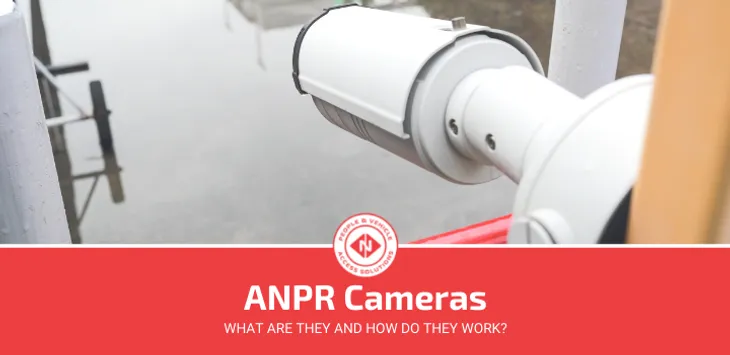
The camera is the front end of the system. Unlike standard CCTV cameras, dedicated ANPR cameras are purpose-built with infrared illumination, high-resolution sensors, and embedded processing designed specifically for plate recognition. They are typically weatherproof (rated IP66 or higher) and designed for outdoor mounting at entry and exit points.
Processing Software
ANPR software is the intelligence layer that converts raw camera images into actionable data. It handles the OCR processing, database management, and decision-making. Modern ANPR software can be deployed on a local server or in the cloud, and typically provides real-time monitoring dashboards, event logging, and reporting.
Network Infrastructure
The camera, server, and access control panel communicate via a high-speed data network. This can be wired (Ethernet or fibre optic) for fixed installations, or wireless (Wi-Fi or 4G/5G cellular) for remote or temporary sites.
Vehicle Database
A database of authorised vehicle registration numbers is maintained by the system administrator. This can include employee vehicles, resident permits, pre-booked visitors, VIP access lists, and flagged or banned vehicles. Most systems allow bulk import and easy management of these records.
Physical Access Points
Barriers, gates, bollards, or other physical entry controls are triggered by the access controller when a recognised vehicle is detected. These can range from simple arm barriers to full-height security gates depending on the level of security required.
Access Controller
The controller is the decision-making hub that sits between the ANPR software and the physical barrier. It receives the authorisation signal from the software and sends the command to open or close the barrier. It can also manage additional logic such as time-based access rules, zone restrictions, and anti-passback controls.
ANPR Camera Types and Specifications
Not all ANPR cameras are the same, and choosing the right type depends on your site’s requirements and budget.
Dedicated ANPR Cameras
These are purpose-built cameras with an embedded OCR engine that processes plate recognition directly on the camera itself. They operate as standalone units — no external server is needed for the recognition to work, only for database management and reporting.
Dedicated ANPR cameras have a higher upfront cost but offer better reliability, faster processing, and lower ongoing infrastructure requirements.
Video Cameras with LPR Software
Standard CCTV or IP cameras can be paired with server-based License Plate Recognition (LPR) software to provide ANPR functionality. The camera streams video to a server where the software performs the OCR processing.
This approach has a lower camera cost but requires a dedicated server, ongoing software licensing, and a reliable network connection between the camera and server.
Key Specifications to Consider
When evaluating ANPR cameras, these are the specifications that matter most:
- Read speed — The maximum vehicle speed at which the camera can reliably capture a plate. High-end models handle up to 240 km/h; most commercial applications need 30-50 km/h.
- Read distance — The effective range at which the camera can read plates, typically 2-25 metres depending on the model and lens configuration.
- Accuracy rate — Modern dedicated ANPR cameras achieve accuracy rates of 95-99%+ under normal conditions. Accuracy can be affected by obscured, dirty, or damaged plates.
- Weather resistance — Outdoor cameras should be rated IP66 or IP67 for protection against rain, dust, and temperature extremes.
- IR illumination — Essential for 24/7 operation. Built-in infrared LEDs illuminate the plate without producing visible light, enabling clear reads at night.
- Integration — Check compatibility with your existing access control system and software. Most ANPR cameras output in industry-standard Wiegand or TCP/IP formats.
For a detailed cost comparison of different ANPR options, see our guide on ANPR system costs.
ANPR for Vehicle Access Control
Automatic number plate recognition is widely used as a vehicle access control solution across many industries and environments:
Commercial and Industrial Sites
Offices, business parks, warehouses, and logistics hubs use ANPR to automate employee vehicle access and manage visitor entry without the need for manned gatehouses or physical tags. Once a staff member’s registration is added to the system, their vehicle is recognised automatically every time they arrive.
Car Parks (Public and Private)
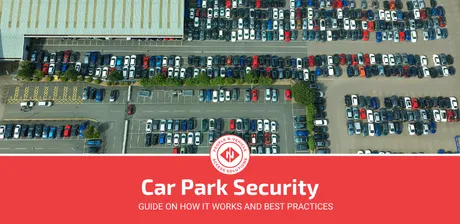
ANPR manages entry, exit, and payment in both public multi-storey car parks and private employee parking. Cameras at entry and exit points log every vehicle, enabling automated enforcement, overstay detection, and ticketless parking. For more on keeping car parks secure, see our guide to car park security.
Airports and Ports
High-security transport environments use ANPR alongside other identification methods to control vehicle access to restricted zones, manage staff parking, and automate passenger drop-off and pick-up areas.
Healthcare and Education
Hospitals, universities, and schools use ANPR to manage limited parking capacity and secure site perimeters from unauthorised vehicles. The technology is particularly valuable at hospitals where parking congestion can affect patient access and emergency vehicle flow.
Residential and Gated Communities
ANPR replaces vehicle tags in gated residential estates and apartment complexes, providing frictionless access for residents and controlled visitor entry. Temporary visitor access can be granted by adding a registration to the system for a set period.
Sports Venues and Events
Stadiums, concert venues, and tourist attractions use ANPR to manage high-volume, event-driven traffic. Pre-registered vehicles can be fast-tracked through entry points while general traffic is directed to appropriate parking areas.
Logistics and Distribution
Haulage depots and distribution centres use ANPR to automate goods-in and goods-out tracking, ensuring only authorised vehicles access loading bays and restricted areas. The system logs arrival and departure times for compliance and scheduling purposes.
ANPR and Smart Parking
ANPR is transforming car park management by enabling fully automated, ticketless parking experiences. By integrating with parking management software and counting systems, ANPR cameras create a seamless end-to-end parking solution.
How ANPR Parking Works
When a vehicle enters a car park, the ANPR camera captures its number plate and logs the entry time. On exit, the system calculates the duration and any associated fees. Pre-authorised vehicles — employees, permit holders, or pre-paid bookings — are granted automatic barrier access without stopping.
Parking Features Enabled by ANPR
- Ticketless entry and exit — eliminating lost tickets and manual validation
- Automated payment via apps, online portals, or integrated payment machines
- Occupancy tracking with real-time space availability data fed to variable message signs
- Flexible parking rules — maximum stay limits, permit-only zones, limited free periods, and time-based pricing
- Pre-book and pre-pay platforms for hospitals, events, and other high-demand sites
- Overstay detection and enforcement with automated notifications and penalty processing
- Cloud-based management enabling remote monitoring and administration of multiple sites
This integrated approach offers motorists a secure and efficient experience, whilst providing site managers with better return on investment and improved operational workflow.
Benefits of ANPR for Business
Easy Installation
ANPR solutions are relatively straightforward to install. A dedicated ANPR camera, network connection, and access controller are the core requirements. Most installations can be completed and operational within a few hours without the need for specialist equipment.
24-Hour Automated Security
ANPR provides round-the-clock automated access control. When pre-approved vehicles approach, the barrier opens automatically, allowing free-flowing vehicle access in and out of the site. Access can be revoked or modified at any time from the management software.
This removes the need for security staff to be on-site around the clock, as the system operates autonomously.
Increased Revenue
For commercial car parks, ANPR provides a powerful way to maximise revenue. Cameras monitor every registration that enters and exits, enabling accurate duration tracking, automated fee calculation, and integration with cashless payment systems.
ANPR can also support cloud-based pre-book and pre-pay platforms. The cameras identify registered vehicles on entrance and exit, creating an entirely frictionless parking environment. This is particularly valuable at high-congestion sites such as hospitals and event venues.
Touchless Vehicle Access
ANPR is inherently contactless — drivers never need to physically touch any equipment to enter or leave the premises. This removes the need for keypads, ticket dispensers, or card readers at entry points, resulting in faster throughput and less congestion.
No Tags or Cards Needed
Unlike RFID-based vehicle access control, ANPR does not require physical tags, cards, or transponders to be issued to each vehicle. The vehicle’s number plate is the credential. This significantly reduces ongoing costs and administration, especially for sites with high vehicle turnover or visitor traffic.
For sites that do use tags, it is worth comparing long-range RFID vs ANPR to determine the best fit for your requirements.
Detailed Audit Trail
Every vehicle entry and exit is logged with a timestamp, plate image, and recognition result. This creates a comprehensive audit trail that is valuable for security investigations, dispute resolution, compliance reporting, and operational analysis.
Frequently Asked Questions About ANPR
What does ANPR stand for?
ANPR stands for Automatic Number Plate Recognition. In the United States and Canada, the same technology is commonly known as ALPR (Automatic License Plate Recognition).
What is an ANPR camera?
An ANPR camera is a specialised camera equipped with infrared illumination and optical character recognition software, designed to capture and read vehicle number plates automatically — day or night, in all weather conditions.
How accurate is ANPR?
Modern dedicated ANPR cameras achieve accuracy rates of 95-99% or higher under normal conditions. Accuracy can be affected by obscured, damaged, or dirty number plates, extreme weather, non-standard plate formats, or poor camera positioning.
How much does an ANPR system cost?
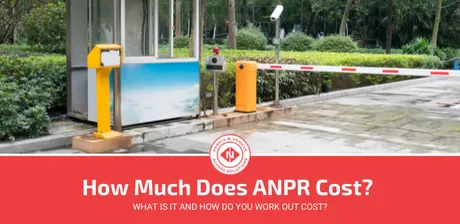
ANPR system costs vary depending on the number of cameras, site complexity, and whether you choose dedicated ANPR cameras or video cameras with LPR software. See our detailed ANPR system cost guide for a full breakdown of typical pricing.
Can ANPR work at night?
Yes. ANPR cameras use built-in infrared (IR) illumination to capture clear images of number plates regardless of ambient lighting. This enables reliable 24/7 operation without any visible flash or additional lighting equipment.
What is the difference between ANPR and ALPR?
ANPR and ALPR refer to the same technology. ANPR (Automatic Number Plate Recognition) is the standard term used in the UK and Europe, while ALPR (Automatic License Plate Recognition) is the equivalent term used in North America.
Does ANPR work with existing access control systems?
Yes. Most ANPR cameras output data in standard formats such as Wiegand or TCP/IP, making them compatible with the majority of existing access control systems. ANPR can also integrate with parking management, visitor management, and security platforms.